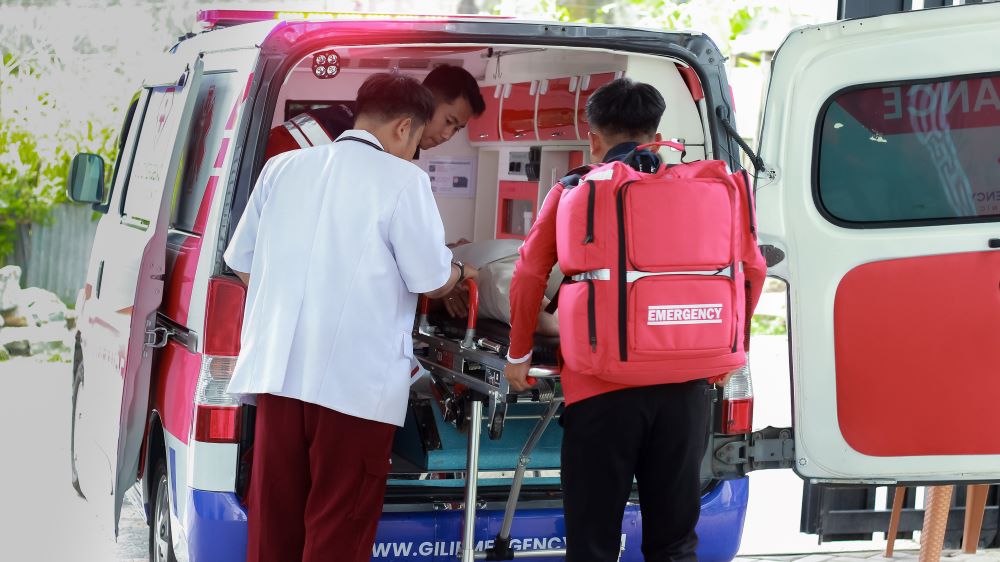
If you picture the Gili Islands as a quiet tropical escape—white sand, bicycles rolling softly on dusty paths, and waves glowing turquoise under the sun—you’re absolutely right. But there’s one thing most travelers never think about until they really need it: ambulance Gili.
And trust me, knowing how emergency care works on these motor-free islands can make a world of difference.
I still remember a moment when a traveler I met—let’s call her Mia—collapsed from heat exhaustion after a long snorkeling trip around Gili Air. The sun was merciless, the water deceptively warm, and she didn’t drink enough before heading out. When she fainted, we quickly realized something: Gili may be paradise, but emergencies don’t care where you are. What saved the day was the surprisingly efficient, though unconventional, ambulance Gili system.
Understanding How the Gili Ambulance System Actually Works
Because motorized vehicles are not allowed on the islands, you won’t see the classic wailing sirens and flashing lights of urban emergency care. Instead, ambulance Gili operates with a combination of innovative, island-friendly solutions:
-
Electric emergency carts
-
Motorized medical bikes (in approved zones)
-
Modified horse carts (cidomo) for urgent needs
-
Boat ambulances for hospital transfers to Lombok
It sounds unusual, right? But that’s exactly what makes it fascinating. The system blends island culture with the necessity of rapid medical response.
Sometimes you might even hear a bell ringing instead of a loud siren—old-school, a little quirky, but surprisingly effective.
Emergency Response on Land
On land, ambulance Gili teams use narrow, compact vehicles that can zip through tight sandy paths and crowded beachside walkways. I once saw paramedics maneuver an emergency cart through a sunset crowd at Gili Trawangan—sweat dripping, wheels crunching softly over sand, yet their focus unshaken. It was a scene that made me appreciate how adaptable and determined these teams are.
The Boat Ambulance: The True Lifeline
Since the Gili Islands are relatively small, serious medical cases are usually transferred to Lombok’s hospitals. This is where the boat ambulance becomes the real hero.
From severe allergic reactions to diving accidents, the boat ambulance is the fastest way to reach full medical facilities.
There’s something unforgettable about being on a night medical transfer: the hum of the boat engine, the salty breeze hitting your face, the glow of island lights fading behind you—it’s eerie but strangely calming. And in critical moments, that boat feels like hope itself.
Why Ambulance Gili Matters More Than You Think
You might be wondering:
Is emergency care really that important on such small islands?
Short answer: Yes. Completely.
Here’s why.
1. Travelers in Gili Are Highly Active
People come to Gili to move their bodies, explore the water, and chase sunsets. Activities like:
-
snorkeling
-
scuba diving
-
cycling
-
paddle boarding
-
jogging on sand
-
late-night partying
…all increase the chance of accidents or sudden health issues.
I once met a beginner diver who panicked at depth and surfaced too quickly. He experienced mild decompression symptoms, and the ambulance Gili team reacted immediately. Without quick evacuation, the situation could have escalated fast.
2. Medical Facilities Are Limited
Although there are clinics on all three islands, they cannot handle advanced trauma or serious medical emergencies. That’s why rapid response and fast transfer are crucial.
3. In Emergencies, Every Minute Counts
Conditions like:
-
cardiac arrest
-
severe dehydration
-
major cuts
-
drowning incidents
-
anaphylaxis
all require quick action. The existence of ambulance Gili gives travelers peace of mind—knowing help is never too far, even on a small island.
What Actually Happens When You Call the Gili Ambulance?
Let’s imagine it as if you were there—because this pacing-leading helps you picture how the system works.
You’re relaxing under a palm tree, feeling the soft breeze and hearing the gentle push of the tide. Suddenly, someone nearby collapses.
Here’s what happens next:
-
Locals immediately call the nearest clinic.
Hotels, dive shops, and restaurants all have emergency contact numbers. -
Medical staff arrives using an emergency cart or motorbike.
You’ll see them weaving quickly through narrow sandy paths. -
First aid is given on-site.
Oxygen, AED, wound care, stabilizing techniques—everything they can do right there. -
If needed, the patient is transported to the pier.
-
A boat ambulance transfers them to Lombok, where a standard road ambulance awaits.
The underlying message?
You’re never really alone during an emergency here. Help is structured, coordinated, and surprisingly fast.
Safety Tips for Travelers Visiting the Gili Islands
This isn’t about planting fear—quite the opposite. Knowing how things work helps you stay safe and enjoy your holiday fully.
Here are simple, practical tips I often give my friends:
Stay Hydrated
The heat is intense, and most activities involve the sun or the ocean. Dehydration is one of the most common reasons tourists need ambulance Gili.
Wear Footwear at Night
The islands have limited street lighting. Stepping on coral fragments or sharp stones is more common than you think.
Bring Personal Medication
Especially antihistamines, pain relievers, and stomach medication. Seafood allergies and stomach issues can catch you off guard.
Know Where the Nearest Clinic Is
All three islands have multiple clinics, usually near the main roads.
By following these small steps, you’ll reduce your chances of needing emergency help—but it feels good to know that ambulance Gili is there if things go wrong.
The Future of Emergency Care in Gili
During one of my trips, I chatted with a local medical worker who shared their vision for the future: upgraded ambulance boats, GPS-enabled emergency carts, and improved island clinics with more advanced equipment.
With tourism growing, the island seems committed to strengthening its emergency infrastructure. And honestly, it’s inspiring to see how much they care about the safety of visitors and residents alike.
Why Knowing About Ambulance Gili Matters
Before I ever stepped foot in the Gili Islands, I never once thought about medical services. Who does, right? But after experiencing a few real-life emergencies—both my own and others’—I realized that understanding ambulance Gili is not just useful… it’s empowering.
From the paramedics rushing under the hot sun to the boat captains navigating waves in the dark, these people are the quiet protectors of paradise.
So if you’re planning a trip to Gili, remember this:
The islands may feel remote, but with ambulance Gili, you’re always in good hands.